
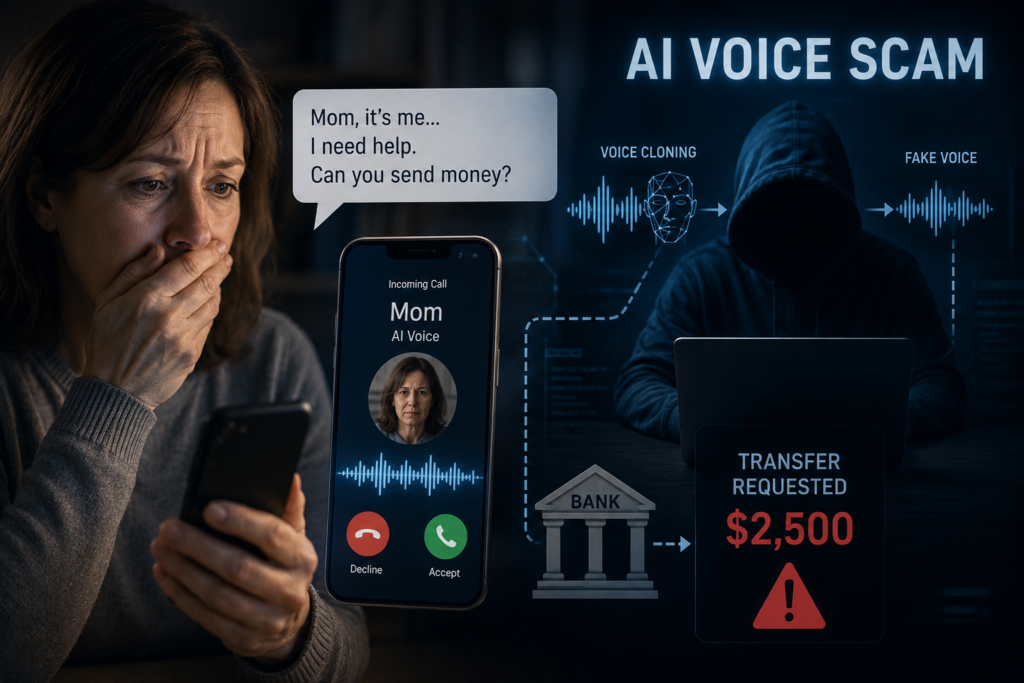
A phone rings late at night. On the other end is your daughter, your boss, or even your bank manager. The voice sounds completely genuine. They are distressed, urgent, and asking for money or sensitive information. You react instinctively because you trust the voice you hear.
Except it is not them.
Welcome to the unsettling world of AI voice scams, one of the fastest growing forms of cybercrime in the digital age. As artificial intelligence becomes more advanced, criminals are using it to imitate real voices with frightening accuracy. The result is a new generation of scams that can deceive even cautious and tech savvy people.
What Are AI Voice Scams?
AI voice scams use artificial intelligence to clone or imitate a person’s voice. Criminals can create convincing fake audio using only a few seconds of recorded speech taken from social media videos, podcasts, voicemail greetings, or online interviews.
Once the voice has been copied, scammers use it to manipulate victims into handing over money, passwords, or private information.
The technology behind these scams is known as voice synthesis or voice cloning. Originally developed for legitimate uses such as accessibility tools, entertainment, and customer service, it has increasingly fallen into the wrong hands.
Why Are They So Convincing?
Human beings naturally trust familiar voices. Hearing the voice of a loved one instantly lowers suspicion and creates an emotional reaction.
Modern AI systems can now reproduce:
- Tone and accent
- Speech patterns
- Pauses and breathing
- Emotional expression
- Regional dialects
In many cases, the fake voice sounds realistic enough to fool family members, colleagues, and even trained professionals.
Unlike older scam calls that relied on robotic voices or obvious scripts, AI generated speech can sound smooth, natural, and deeply personal.
Common Types of AI Voice Scams
The Family Emergency Scam
One of the most disturbing examples involves scammers pretending to be a relative in danger.
Victims may receive a frantic call from what sounds exactly like a son, daughter, or grandchild claiming they have been arrested, kidnapped, or injured abroad. The caller begs for urgent financial help and pleads with the victim not to tell anyone.
The emotional panic often causes people to act before thinking critically.
Fake Business Calls
Criminals are also targeting businesses by impersonating executives or senior managers.
An employee may receive a call from what sounds like their managing director requesting an immediate bank transfer or sensitive company data. Since the voice appears authentic, staff may comply without question.
This type of fraud has already cost companies millions worldwide.
Banking and Identity Fraud
Some scammers use cloned voices to bypass voice authentication systems used by banks or customer service providers.
If a bank relies heavily on voice recognition, a convincing AI imitation could potentially gain access to accounts or sensitive information.
How Scammers Get Your Voice
Many people unknowingly provide enough audio online for scammers to work with.
Common sources include:
- TikTok videos
- Instagram stories
- YouTube uploads
- Podcasts
- Voice notes
- Public interviews
- Voicemail greetings
Even short clips can be enough for modern AI tools to generate realistic speech patterns.
Signs You May Be Facing an AI Voice Scam
Although these scams are highly sophisticated, there are warning signs to watch for.
Be cautious if the caller:
- Creates extreme urgency
- Demands immediate payment
- Requests secrecy
- Avoids video calls
- Becomes aggressive when questioned
- Asks for cryptocurrency or gift cards
Sometimes the voice may also sound slightly too perfect, lacking the natural imperfections of real conversation.
How to Protect Yourself
Create a Family Safe Word
Families can agree on a secret phrase or question that only genuine relatives would know. This simple step can quickly expose a fake caller.
Verify Through Another Channel
If you receive a suspicious call, hang up and contact the person directly using a trusted number or messaging app.
Do not rely solely on the incoming call.
Limit Public Voice Content
Consider how much audio you share online. Public videos and recordings may provide scammers with valuable material.
Be Sceptical of Urgent Requests
Pressure and panic are key tools used by fraudsters. Slow down and verify before acting.
Strengthen Security Measures
Businesses should introduce multi step verification for financial transactions rather than relying on voice approval alone.
Could You Be Fooled?
The uncomfortable truth is that almost anyone could.
AI voice scams exploit emotion, trust, and instinct rather than technical weakness. Even people who understand cybercrime can react impulsively when they believe a loved one is in danger.
As AI technology continues to evolve, these scams are likely to become even more convincing and widespread. Awareness is now one of the strongest defences available.
The next time your phone rings, the voice on the other end may sound familiar. That does not always mean it is real.
To learn more about staying safe online check out our helpful courses, or to stay up to date follow on linkedin.
