
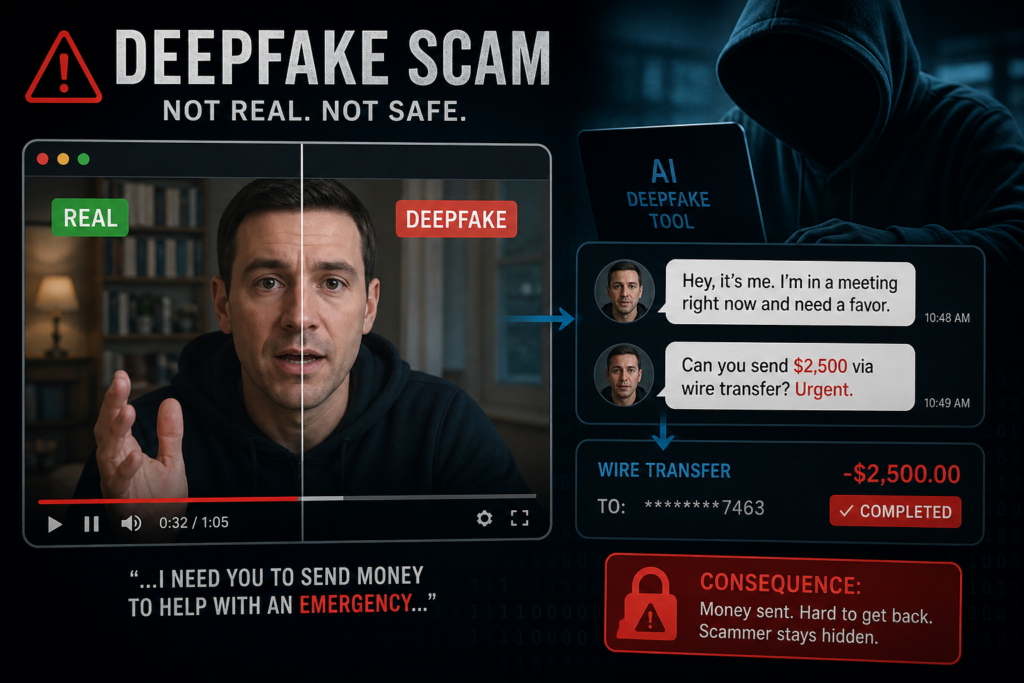
Deepfake technology, once seen as a novelty, has rapidly evolved into a serious threat for individuals and businesses alike. By using artificial intelligence to create highly convincing fake audio, video, or images, criminals can impersonate real people with alarming accuracy. These scams are becoming more sophisticated and more frequent, making it increasingly important to understand how they work and how to recognise them.
What Are Deepfakes and Why Are They Dangerous
A deepfake is a piece of media that has been digitally altered using artificial intelligence to make it appear as though someone said or did something they never actually did. This might involve a video of a senior executive giving instructions, or an audio message that sounds exactly like a trusted colleague. The danger lies in how believable these fakes can be. When people trust what they see and hear without question, they become more vulnerable to manipulation.
Criminals often use deepfakes to support fraud attempts, such as convincing employees to transfer money, share sensitive information, or grant access to secure systems. In some cases, deepfakes are used to damage reputations or spread misinformation. As the technology becomes more accessible, the barrier to entry for creating convincing fakes continues to fall.
Common Types of Deepfake Scams
One of the most common forms is voice impersonation. A scammer may generate an audio clip that mimics a manager or executive, urgently requesting a payment or confidential data. Because the voice sounds familiar, employees may act quickly without verifying the request.
Video deepfakes are also becoming more prevalent. These can involve fake video calls or recorded messages that appear to come from a trusted individual. In a business setting, this could be used to authorise financial transactions or influence decisions.
Another variation involves combining deepfake content with traditional phishing techniques. For example, an email may appear legitimate, and be reinforced with a voice message that seems to confirm its authenticity. This layered approach makes the scam more convincing and harder to detect.
Warning Signs to Look Out For
Despite their sophistication, deepfakes often have subtle flaws. In video content, you might notice unnatural facial movements, inconsistent lighting, or slight delays between speech and lip movement. The person’s expressions may appear stiff or not quite aligned with what they are saying.
In audio deepfakes, the voice may sound accurate but lack natural variation. It can appear flat, overly consistent, or slightly distorted. There may also be unusual pauses or phrasing that does not match the person’s typical communication style.
Context is equally important. Unexpected or urgent requests should always raise suspicion, especially if they involve financial transactions or sensitive information. If something feels out of character for the person making the request, it is worth taking a closer look.
Practical Steps to Verify Authenticity
The most effective way to protect against deepfake scams is to verify requests through a separate and trusted channel. If you receive an unusual message from a colleague or manager, contact them directly using a known phone number or internal communication tool. Avoid relying on the same channel through which the request was received.
Establishing clear internal procedures can also help reduce risk. For example, businesses can require multiple levels of approval for financial transactions or sensitive actions. This makes it more difficult for a single deceptive message to succeed.
Training employees to recognise the signs of deepfakes is another essential step. Regular awareness sessions can help staff stay informed about emerging threats and feel more confident in questioning suspicious requests.
The Role of Technology and Policy
Organisations can also use technology to detect and prevent deepfake scams. Some tools are designed to analyse audio and video for signs of manipulation, while others focus on identifying unusual patterns in communication. While no solution is perfect, combining these tools with strong internal policies can significantly reduce risk.
Clear guidelines around communication and verification should be established and regularly reviewed. Employees should know how to report suspicious activity and feel supported in doing so. A proactive approach can make a significant difference in preventing successful attacks.
Staying Vigilant in a Changing Landscape
Deepfake scams are likely to continue evolving as the underlying technology improves. What may seem easy to spot today could become far more convincing in the near future. This makes ongoing vigilance essential for both individuals and organisations.
By understanding how deepfakes work, recognising the warning signs, and putting robust verification processes in place, it is possible to reduce the risk of falling victim to these scams. Awareness and caution remain the strongest defences in an increasingly complex digital environment.
To learn more about staying safe online check out our helpful courses, or to stay up to date follow on linkedin.
