
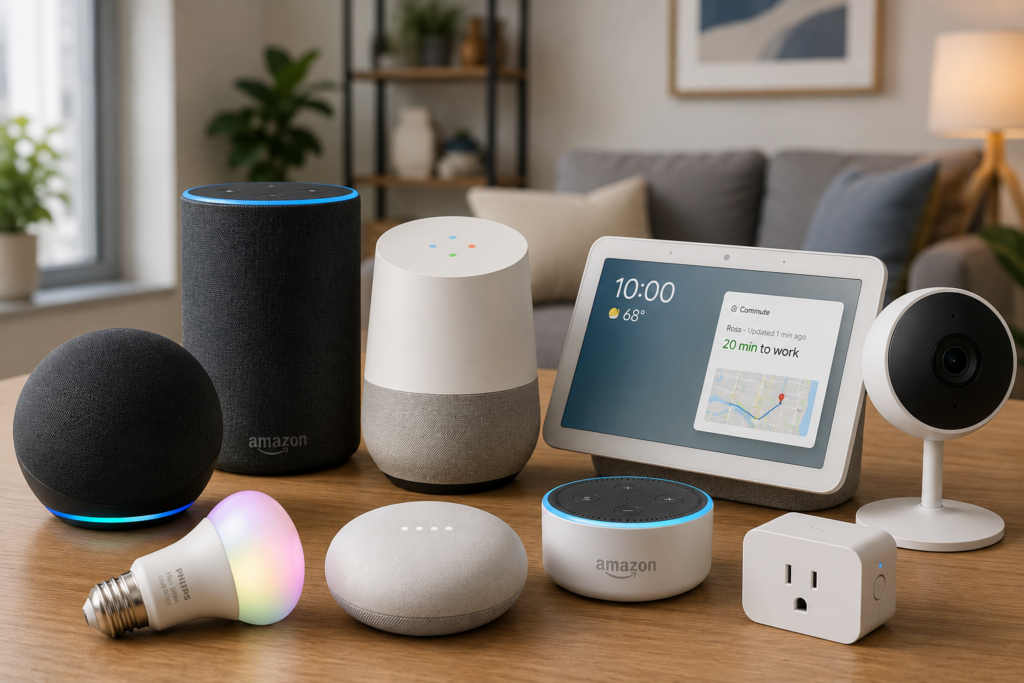
Smart home technology has moved from novelty to normal life. Voice assistants can dim lights, lock doors, play music, manage shopping lists and even monitor security cameras. Devices powered by Amazon Alexa and Google Home are now common in millions of households.
Convenience, however, raises an obvious question: how secure are these devices?
The answer is complicated. Alexa and Google Home systems are generally secure enough for ordinary consumer use, but they are not risk-free. Like any internet-connected technology, they collect data, rely on cloud services and can become targets for hackers or misuse if poorly configured.
How Smart Speakers Work
Devices such as the Amazon Echo and Google Nest Audio constantly listen for a “wake word” like “Alexa” or “Hey Google”. Once activated, the device records the command and sends it to cloud servers where speech recognition software processes the request.
This design creates convenience, but it also means audio snippets, usage habits and account information may be stored remotely. According to Amazon Alexa Privacy Hub and Google Assistant Privacy Information, users can review and delete stored voice recordings.
The Main Security Risks
1. Data Collection and Privacy
The biggest concern for many people is not a dramatic hacking incident but the amount of personal information collected.
Smart assistants can gather:
- Voice recordings
- Search requests
- Shopping behaviour
- Device usage patterns
- Location information
- Smart home routines
This data helps improve services and personalise responses, but it also creates detailed profiles of household activity. If accounts are compromised, attackers could gain access to sensitive information.
In previous years, reports revealed that human reviewers sometimes listened to anonymised voice recordings to improve speech recognition systems. Both Amazon and Google later introduced more explicit privacy controls and opt-out settings.
2. Unauthorised Access
Weak passwords remain one of the largest security problems in connected homes. If someone gains access to a user’s Amazon or Google account, they may control connected devices remotely.
Potential consequences include:
- Unlocking smart doors
- Disabling alarms
- Viewing camera feeds
- Making purchases through voice assistants
Two-factor authentication significantly reduces this risk and is strongly recommended.
3. Vulnerable Third-Party Devices
The smart speaker itself is not always the weakest point. Many smart homes include inexpensive cameras, plugs, bulbs and sensors from lesser-known manufacturers.
A poorly secured smart lightbulb or camera can create an entry point into the wider home network. Cybersecurity researchers have repeatedly warned that low-cost Internet of Things devices often receive limited software support and infrequent security updates.
4. Accidental Recordings
Voice assistants occasionally activate by mistake after hearing words that resemble their wake commands. This can result in unintended recordings.
While companies state that devices are not continuously uploading conversations, accidental activations do occur. Users concerned about this issue can mute microphones manually on most devices.
What Amazon and Google Do to Improve Security
Both companies invest heavily in cybersecurity and privacy features.
Amazon Alexa Security Features
Amazon offers:
- Voice history deletion
- Microphone mute controls
- Two-step verification
- Device activity monitoring
- Automatic software updates
Google Home Security Features
Google provides:
- Security check-up tools
- Account activity alerts
- Guest modes
- Auto-deletion settings
- Advanced account protection features
Large technology firms generally maintain stronger security infrastructure than many smaller smart-device manufacturers. However, no connected system can be considered completely immune to breaches.
Are Smart Homes Easy to Hack?
Hollywood often exaggerates the danger. Most real-world attacks target weak passwords, outdated firmware or poorly configured networks rather than sophisticated voice assistant exploits.
For the average household, the likelihood of a highly advanced attack is relatively low. Opportunistic cybercriminals usually focus on easier targets.
Still, a poorly secured smart home can become vulnerable if users ignore basic security practices.
How to Make Alexa and Google Home More Secure
Users can reduce risks considerably with a few practical steps.
Use Strong Passwords
Create unique passwords for Amazon and Google accounts. Avoid reusing passwords from other services.
Enable Two-Factor Authentication
This adds an extra layer of protection even if a password is stolen.
Review Privacy Settings
Both platforms allow users to delete recordings and limit data retention.
Keep Devices Updated
Software updates often patch newly discovered vulnerabilities.
Secure Your Wi-Fi Network
Use WPA3 or WPA2 encryption and change default router passwords immediately.
Limit Third-Party Integrations
Only connect devices and applications from trusted manufacturers.
Mute Microphones When Needed
Most smart speakers include a physical microphone-off button for additional privacy.
The Balance Between Convenience and Privacy
Smart home assistants offer genuine convenience. They simplify daily tasks, improve accessibility and help manage connected homes efficiently. For many users, the benefits outweigh the risks.
At the same time, these devices require trust in large technology companies and careful attention to privacy settings. Consumers should understand that convenience often comes with increased data collection.
The most realistic view is neither panic nor blind trust. Alexa and Google Home are reasonably secure when configured properly, but they are not entirely private. Like smartphones and laptops, they demand sensible digital hygiene and informed use.
Final Thoughts
Smart speakers are unlikely to disappear from modern homes. As artificial intelligence and home automation continue evolving, voice assistants will become even more integrated into everyday life.
For users willing to manage privacy settings, use strong security practices and stay aware of potential risks, Alexa and Google Home can be used safely. The real danger usually comes not from the devices themselves, but from weak account security and neglected smart home ecosystems.
To learn more about staying safe online check out our helpful courses, or to stay up to date with us follow on linkedin.
